Your Journey to Mental Wellbeing Starts Here

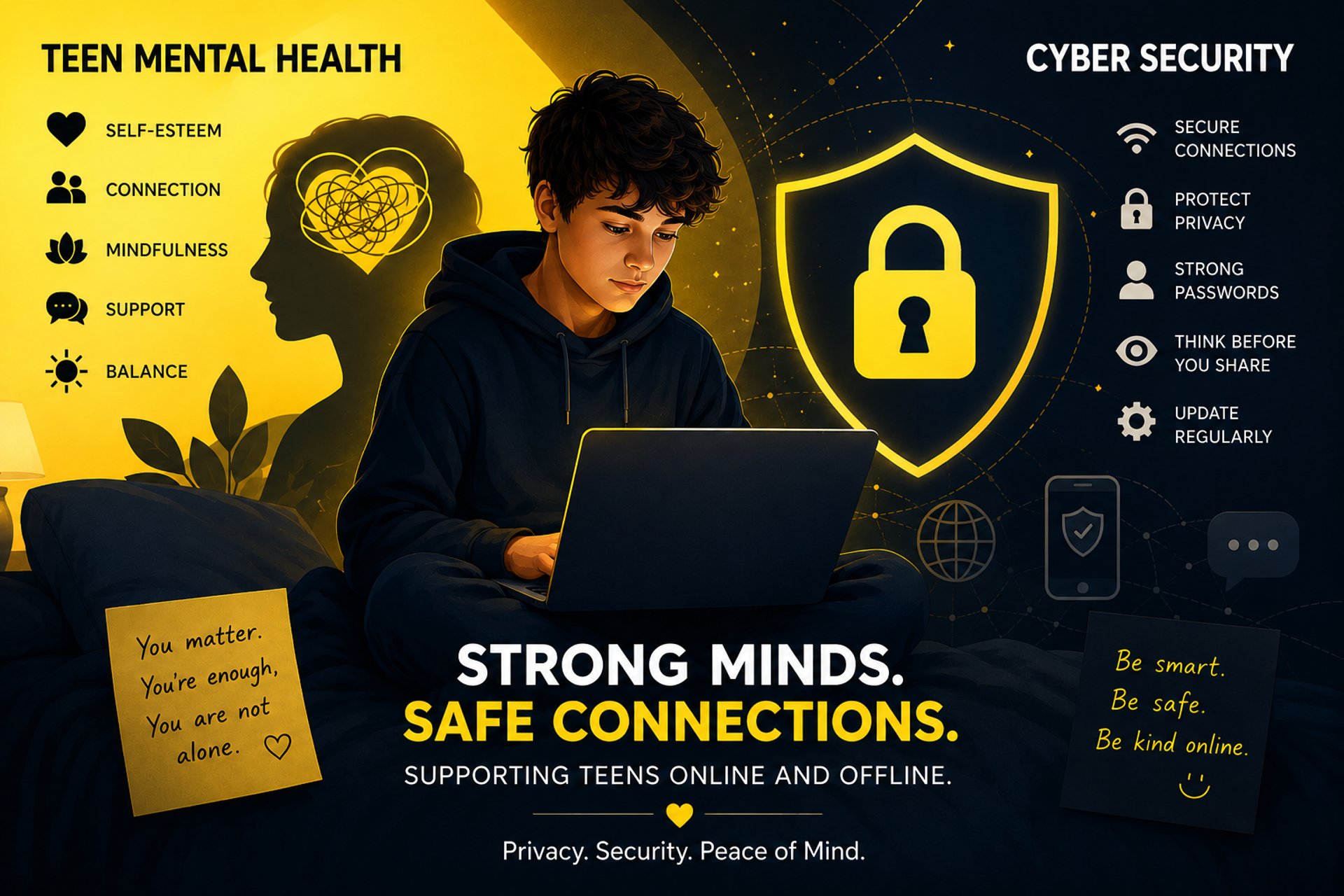
Raising Digitally Safe Teens: Protecting Mental Health in an Online World
In today's digital world, teenagers face unique challenges that extend far beyond the schoolyard. From cyberbullying and social media pressures to online privacy and cybersecurity risks, young people need both emotional resilience and practical safety skills to navigate the internet confidently. In this article, Serene Solutions Counselling and Social Services explores the connection between teen mental health and online safety, offering practical guidance for parents, caregivers, and young people. Learn how open communication, digital literacy, privacy awareness, and healthy online habits can help teenagers build stronger minds and safer connections in an increasingly connected world.
MENTAL HEALTHTRAUMAINFORMEDTHERAPYCYBERSAFETY
Theresa Potter
5/30/20264 min read
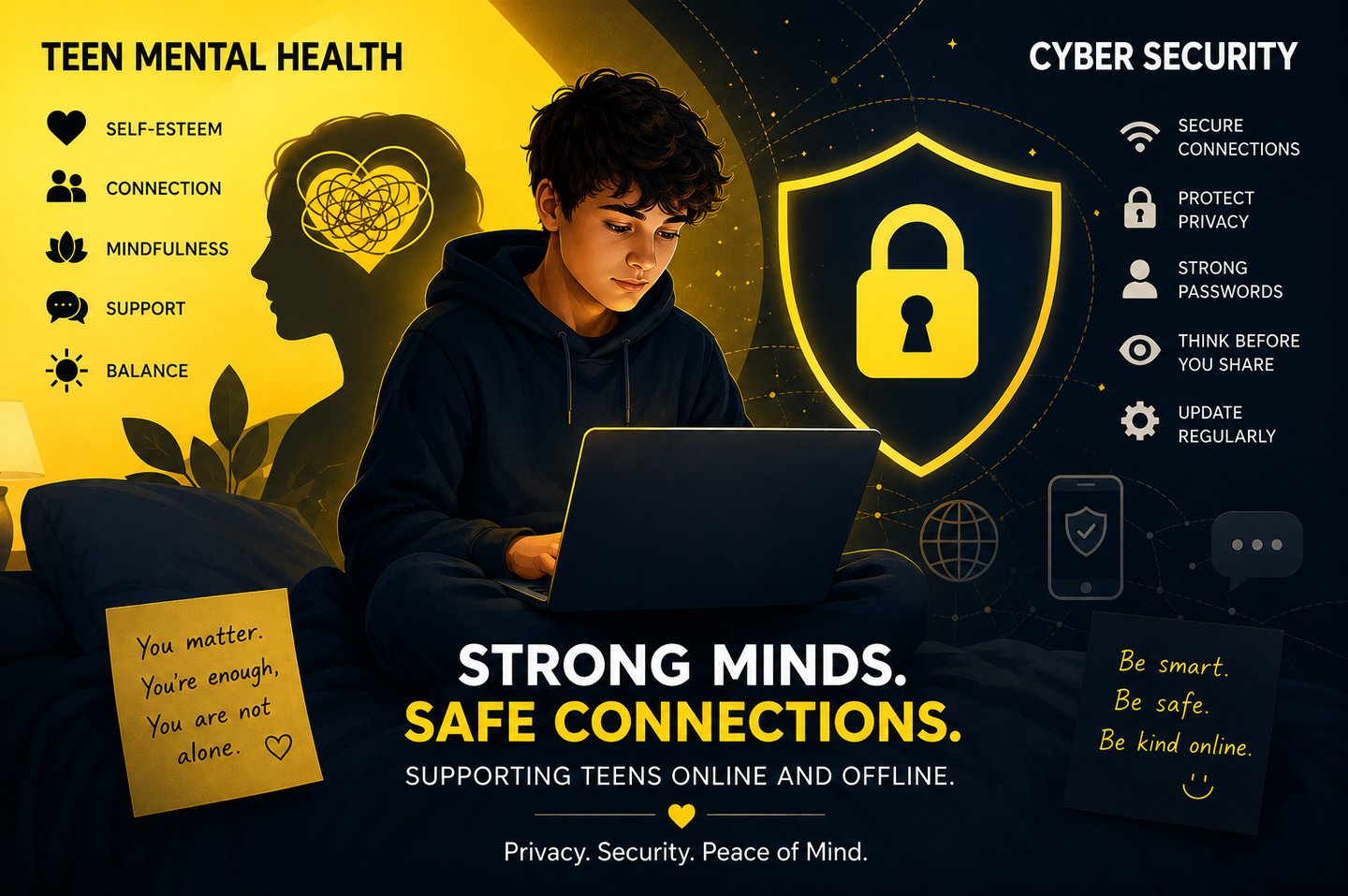
Today's teenagers are the first generation to grow up in a world where being "online" is not an activity. It is a way of life.
From friendships and education to entertainment and identity formation, the digital world plays a significant role in adolescent development. While technology offers extraordinary opportunities for learning, creativity, connection, and self-expression, it also presents challenges that many parents never had to navigate during their own teenage years.
As a therapist working with adolescents, families, and young adults, I regularly see the impact that online experiences can have on mental health. Anxiety, low self-esteem, social comparison, cyberbullying, sleep disruption, and exposure to inappropriate content are becoming increasingly common concerns raised by both parents and young people.
The goal is not to fear technology or eliminate it altogether. Instead, we need to help teenagers develop the skills, awareness, and resilience necessary to engage with the digital world safely and responsibly.
The Hidden Impact of Social Media on Mental Health
Social media can be a wonderful tool for connection. It allows teenagers to maintain friendships, find communities of shared interests, and access valuable educational resources.
However, social media also creates an environment where young people are constantly exposed to carefully curated versions of other people's lives. This can lead to unrealistic expectations and harmful comparisons.
Many teenagers report feeling pressure to:
Look a certain way
Achieve certain milestones
Gain social approval through likes and followers
Present a "perfect" online image
Remain constantly available to peers
Over time, these pressures can contribute to:
Increased anxiety
Low self-esteem
Body image concerns
Feelings of inadequacy
Fear of missing out (FOMO)
Depression and social withdrawal
Research continues to highlight the relationship between excessive social media use and poorer mental health outcomes for some adolescents, particularly when online interactions replace meaningful real-world connections or interfere with sleep and daily functioning.
Cyberbullying Is More Than "Kids Being Kids"
Unlike traditional bullying, cyberbullying follows young people wherever they go.
A hurtful comment, embarrassing photo, exclusion from an online group, or anonymous message can be accessed repeatedly and often reaches a much larger audience than face-to-face bullying.
Young people experiencing cyberbullying may show signs such as:
Reluctance to use devices
Increased anxiety
Mood changes
Social withdrawal
Declining academic performance
Changes in sleep or eating patterns
Emotional distress after being online
Parents often feel powerless when cyberbullying occurs. While it may not always be possible to prevent it entirely, creating an environment where teenagers feel safe discussing their online experiences is one of the strongest protective factors available.
Digital Privacy Matters
Many teenagers understand how to use technology but may not fully appreciate the long-term consequences of sharing personal information online.
Young people often underestimate how much information can be collected through:
Social media profiles
Location sharing
Gaming platforms
Public Wi-Fi networks
Mobile applications
Online purchases and subscriptions
Teaching teenagers about digital privacy is becoming as important as teaching them how to cross a road safely.
Simple habits can make a significant difference:
Using strong passwords
Enabling two-factor authentication
Keeping accounts private
Avoiding sharing personal information publicly
Being cautious when accepting friend requests
Regularly reviewing privacy settings
Updating devices and applications
Digital literacy and privacy awareness are key components of modern online safety.
The Importance of Open Conversations
One of the most effective online safety strategies is also one of the simplest: talking.
Many parents focus on monitoring technology use but underestimate the importance of ongoing conversations about online experiences.
Instead of asking:
"How much time have you spent on your phone?"
Consider asking:
What was the best thing you saw online today?
Have you ever seen something online that made you uncomfortable?
What do your friends do when someone is being bullied online?
How do you know if information online is trustworthy?
What would you do if someone asked for personal information?
Approaching these conversations with curiosity rather than judgment encourages honesty and trust.
Teenagers are far more likely to seek help when they believe they will be listened to rather than punished.
Building Digital Resilience
Ultimately, the goal is not to protect teenagers from every possible online risk.
The goal is to help them develop the confidence and critical thinking skills needed to navigate those risks independently.
Digital resilience includes:
Recognising manipulation and misinformation
Understanding online boundaries
Managing emotional responses to social media
Seeking help when needed
Maintaining healthy offline relationships
Balancing screen time with real-world activities
Protecting personal information
These are life skills that will continue to serve young people well into adulthood.
Supporting Online Safety: Learning from Industry Leaders
At Serene Solutions Counselling and Social Services, we appreciate organisations that actively promote the safe and responsible use of online services for young people. The recent article by CyberGhost VPN on online safety for teens highlights many of the practical steps families can take to protect young people as they navigate an increasingly digital world.
While our focus is on the mental health and emotional wellbeing aspects of adolescent development, we recognise that digital safety and psychological wellbeing are closely connected. Privacy protection, cyberbullying prevention, awareness of online risks, and healthy digital habits all contribute to a safer online environment for teenagers.
CyberGhost's commitment to educating families about online safety aligns with our belief that young people deserve both emotional support and practical tools to help them navigate the challenges of modern technology. By combining digital literacy, privacy awareness, open family communication, and mental health support, we can help teenagers develop the resilience and confidence needed to engage safely with the online world.
We encourage parents and caregivers to remain actively involved in their children's digital lives, not through fear or excessive monitoring, but through ongoing conversations, education, and support. Together, we can create safer online experiences that allow young people to benefit from technology while protecting their wellbeing.
A Final Thought for Parents
Technology is not going away. The online world will continue to evolve, presenting both opportunities and challenges for future generations.
Rather than attempting to eliminate risk entirely, parents can focus on fostering connection, communication, digital literacy, and emotional resilience.
Teenagers who feel supported, understood, and empowered are far more likely to make safe and informed choices online.
If you are concerned about the impact of social media, cyberbullying, online safety, or technology use on your child's wellbeing, professional support can help. Early conversations and intervention can make a significant difference in helping young people build a healthy relationship with the digital world.
At Serene Solutions Counselling and Social Services, we support adolescents, young adults, and families in navigating the challenges of modern life with confidence, resilience, and emotional wellbeing.
Further Reading:
This article was inspired in part by CyberGhost VPN's educational resource on online safety for teenagers. We encourage parents and caregivers interested in learning more about digital privacy, cyber security, and online safety practices to explore their article alongside the mental health considerations discussed here.
Get in touch
Take the first step towards a brighter, more balanced life. Explore the transformative potential of hypnotherapy and psychotherapy with Serene Solutions, and embark on a journey of healing, growth, and self-discovery.